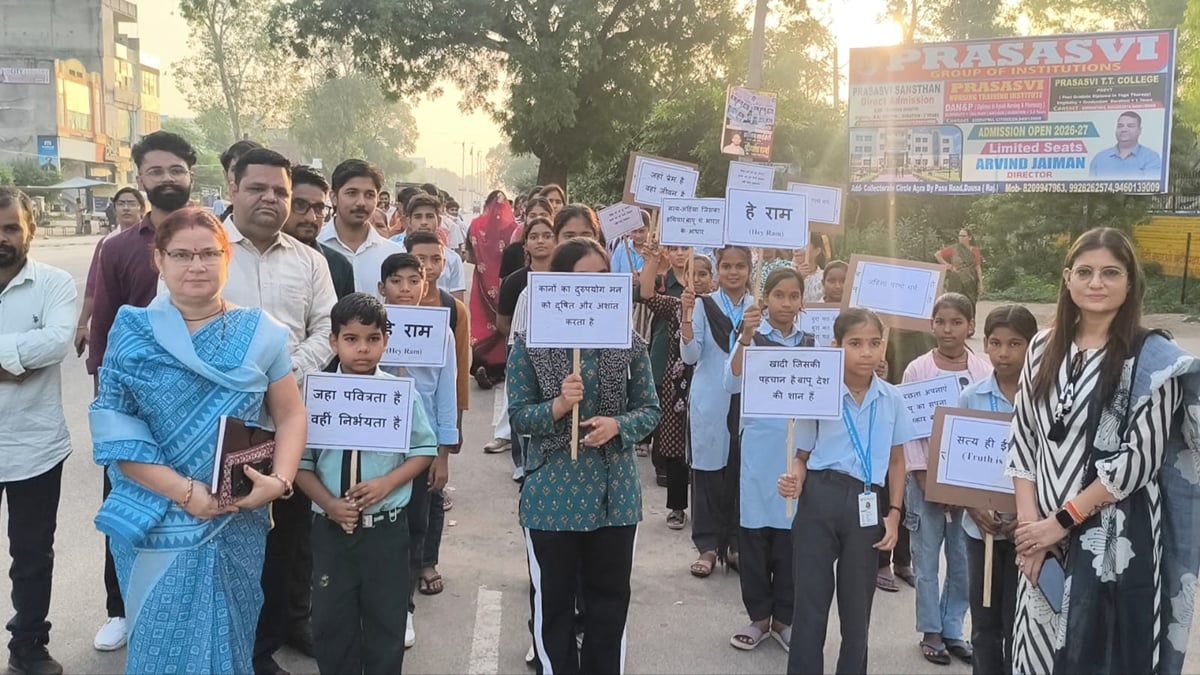
On the auspicious occasion of Gandhi Jayanti and the birth anniversary of Lal Bahadur Shastri, the region of Rajasthan, specifically Dausa, witnessed a remarkable display of communal harmony and unity. The commemorative events brought together citizens from diverse backgrounds to honor the enduring legacies of Mahatma Gandhi and Shastriji. Through meticulously organized morning processions, traditional devotional singing, and vibrant cultural programs, the entire district paid glowing tributes to the founding fathers of the nation.
The historical significance of these national anniversaries traces back to the foundational principles of India's freedom struggle and post-independence nation-building. Mahatma Gandhi championed the eternal philosophies of truth and non-violence, which transformed the Indian independence movement into a mass uprising of moral strength. Simultaneously, Lal Bahadur Shastri provided resolute leadership during critical junctures of national history, immortalizing the inspiring national slogan of 'Jai Jawan Jai Kisan' that continues to energize the collective consciousness of the country.
The ground reality in Dausa reflected immense enthusiasm and participation from people of all age groups, community leaders, and local institutions. The logistical arrangements for the morning processions and cultural gatherings were coordinated to ensure widespread public engagement. Participants marched through the main thoroughfares chanting devotional hymns, prominently featuring Ramdhuni, which created an atmosphere of spiritual serenity, peace, and national pride throughout the municipal limits.
A profound highlight of the commemoration in Dausa was the visible presence and active participation of four prominent spiritual leaders representing diverse religious traditions. These esteemed religious heads delivered compelling messages centered on universal love, mutual respect, and foundational human values. Their unified addresses emphasized that the teachings of Bapu and Shastriji remain exceptionally relevant in contemporary society to bridge divides and foster absolute harmony among all communities.
The regional impact of such collective observances extends deeply into the social fabric of the broader administrative zones, including areas neighboring Kotputli-Behror. By reinforcing messages of communal amity and ethical governance, these celebrations strengthen local community ties and encourage citizens to embody the Gandhian principles of simplicity, service, and civic responsibility in their daily lives and economic pursuits.
Local administrative authorities and civic bodies actively supported the commemorative proceedings, ensuring seamless crowd management, security, and logistical backing for the cultural venues and procession routes. Officials noted that public cooperation played a pivotal role in maintaining peace and order during the large gatherings, reflecting the high civic consciousness of the residents of Dausa and the surrounding regional districts.
Looking forward, community organizations and educational institutions in Dausa have pledged to sustain the momentum of these values through ongoing youth programs, essay competitions, and cleanliness drives aligned with Gandhian ideals. The overarching public expectation is that these persistent educational and cultural initiatives will continue to inspire younger generations to uphold the sacred principles of truth, non-violence, and national dedication in the years to come.