
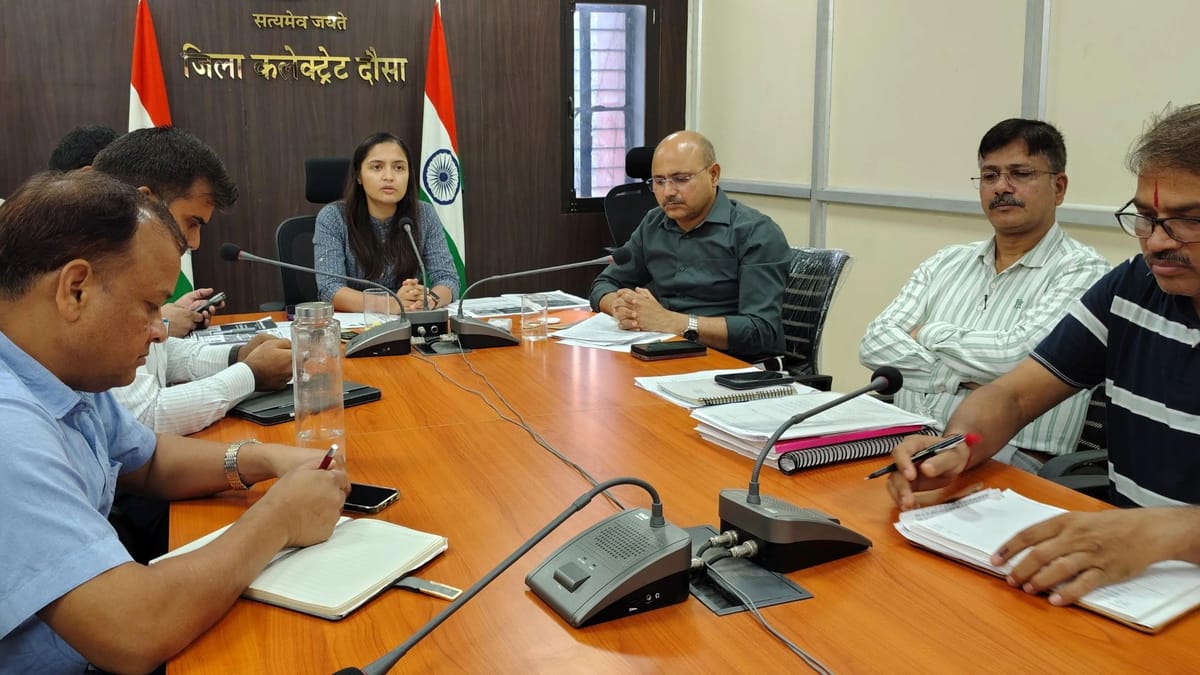
Tomorrow, Dausa in Rajasthan will open the ballot boxes for eleven urban local bodies at eight o’clock, initiating the decisive counting phase of a municipal election that has been underway for roughly a month. The Election Commission has ordered a complete ban on any public procession, citing the need for an orderly and peaceful environment while votes are tallied. This development marks the transition from a campaign characterised by rallies, ward‑level promises and vigorous voter outreach to the moment when the electorate’s choices are formally recorded.
The current urban local body election is part of Rajasthan’s statewide schedule to renew municipal councils across its districts. Historically, these elections have served as a barometer for public sentiment towards state‑level policies, especially in rapidly urbanising regions. In Dausa, the contest involves eleven distinct bodies – ranging from municipal councils in larger towns to nagar panchayats in smaller settlements – each responsible for local infrastructure, water supply, sanitation and community welfare.
Logistical preparations for the counting exercise are extensive. Election officials have deployed over 150 polling staff, secured electronic counting machines, and arranged for continuous power supply to avoid any technical glitches. The counting will commence precisely at eight a.m., with each ballot box opened in the presence of party agents and independent observers. Security forces, including the district police and a contingent of central paramilitary units, have been positioned at the counting centre to enforce the procession ban and to deter any attempts at intimidation.
Local stakeholders have expressed a mixture of anticipation and caution. A resident of the town of Dausa remarked, “We have waited a long time; now we hope the results will reflect the promises made during the campaign.” Traders in the market area noted that the prohibition on processions will keep the streets clear, allowing commerce to continue uninterrupted. District officials, while not naming specific individuals, indicated that the counting will be transparent and that any irregularities will be reported immediately to the Election Commission.
The outcome of these eleven bodies holds particular relevance for the neighbouring Kotputli‑Behror district, where many commuters and business links intersect with Dausa. A smoother transition of power could accelerate joint infrastructure projects, such as road upgrades and water‑resource management schemes that benefit both districts. Conversely, a fragmented council composition might delay collaborative initiatives, affecting local employment and the flow of goods across district borders.
In response to the procession ban, the district administration has issued a detailed circular outlining permissible activities. Police have set up checkpoints at major entry points to the counting venue, and a rapid‑response team has been on standby to address any unforeseen disturbances. The Election Commission has also dispatched a monitoring team to ensure that the counting adheres to statutory timelines and that all party agents receive equal access to the process.
Looking ahead, the counting is expected to conclude by early afternoon, after which provisional results will be announced on the commission’s official website. Final certification of the elected representatives is slated for the following week, allowing newly elected councils to convene and begin budgetary planning for the upcoming fiscal year. Residents and political observers alike are watching closely, hopeful that the transparent completion of this exercise will reinforce democratic norms and set the stage for effective local governance.