
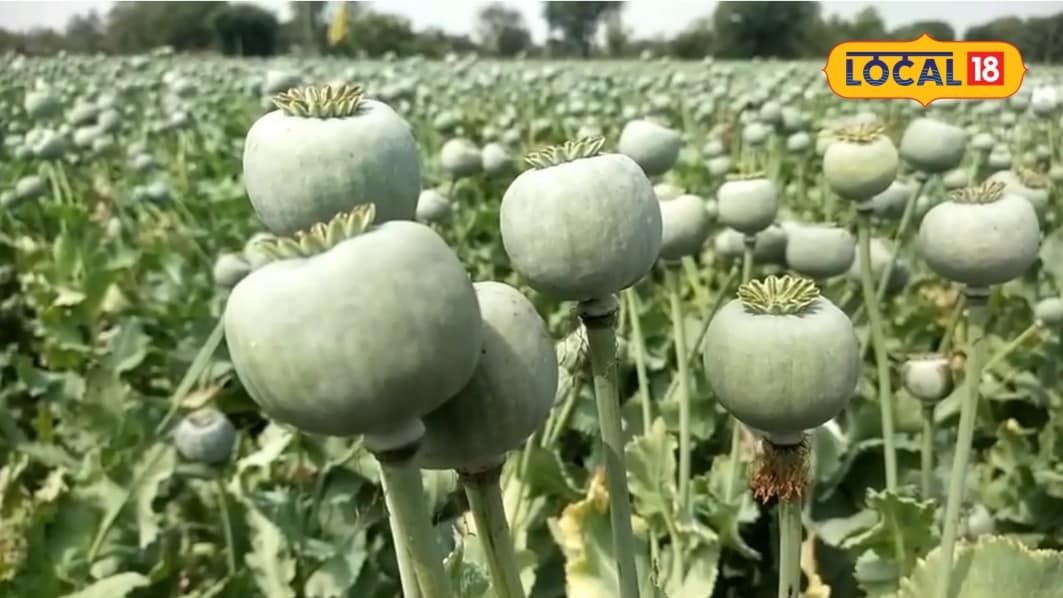
The Central Government has formally promulgated the comprehensive Opium Policy for the 2026-27 agricultural season, introducing significant structural modifications to licensing frameworks and cultivation parameters across designated regions. Spearheaded through the institutional apparatus of the Narcotics Department, this year's regulatory framework aims to broaden agricultural inclusion while simultaneously enforcing strict monitoring standards. The announcement immediately impacts thousands of traditional farming families across Rajasthan, altering the administrative landscape of licensed narcotic crop cultivation through technological integration and revised quantitative metrics.
Historically, the governance of opium cultivation in India has been managed through rigorous bureaucratic procedures, strict licensing quotas, and continuous oversight by central authorities to prevent illicit diversion. Over successive decades, regulatory policies have oscillated between expanding cultivation access to support legitimate medicinal manufacturing and tightening enforcement to meet international treaty obligations. The 2026-27 framework emerges against this intricate backdrop, attempting to reconcile the persistent demands of agrarian communities for broader economic participation with the state's mandatory commitments toward stringent supply-chain security and output accountability.
A critical statistical highlight of the newly released policy is the inclusion of 4,261 additional farmers in Rajasthan who now attain formal eligibility to undertake authorized opium cultivation. Furthermore, the administrative machinery has introduced structural reforms by permitting a 10-are parcel of land for licensing purposes alongside legal provisions allowing cultivators to take agricultural land on lease. Despite these seemingly progressive measures, the ground reality remains fraught with intense anxiety regarding specific yield stipulations, notably the mandatory threshold of 4.4 kilograms of morphine per hectare, which local producers argue is exceedingly difficult to achieve consistently under fluctuating climatic conditions.
Stakeholder sentiment on the ground reflects a complex dichotomy of relief and deep-seated apprehension among farming communities, particularly within the traditional cultivation heartlands of Bhilwara, Chittorgarh, and Pratapgarh. While a section of the agrarian populace acknowledges the benefits of digital process simplification by the Narcotics Department, prominent peasant representatives and local organizations have voiced fierce opposition regarding the anticipated conversion of traditional licensing frameworks into the Concentrated Straw (CPS) methodology. Farmers contend that these stringent transitions threaten their traditional livelihood security, undermine their historic cultivation practices, and impose unrealistic production benchmarks that could lead to widespread disqualifications.
Although the primary epicenter of cultivation lies outside the immediate boundaries of the Kotputli-Behror district, the broader regional economy and agricultural discourse in Rajasthan are profoundly influenced by these central regulatory pronouncements. Local agricultural markets, cooperative societies, and rural banking sectors closely monitor these policy shifts, as the financial stability of thousands of allied rural households directly impacts regional trade velocity and commercial liquidity. The economic ripples of expanded eligibility in neighboring districts resonate across the state's broader agrarian economy, shaping perspectives on state-regulated commercial crops.
In response to mounting criticisms and localized expressions of discontent, administrative authorities within the Narcotics Department maintain that the digital modernization of the application and verification process is designed to eliminate corruption, reduce bureaucratic delays, and ensure absolute transparency. Officials emphasize that the policy parameters are formulated in strict adherence to statutory guidelines and medicinal requirements. However, administrative reassurances have done little to quell the immediate skepticism of cultivators who demand urgent revisions to the contentious 4.4 kg morphine benchmark and the preservation of traditional lancing systems over the controversial CPS mechanism.
Looking toward the forward outlook of the 2026-27 agricultural season, the implementation phase is poised to witness intense administrative engagement and continued unionized vigilance from farming communities. As the digital registration windows open and field verifications commence, the central authorities face the delicate task of executing the policy without triggering widespread agrarian unrest. The coming months will be critical in determining whether administrative flexibility can successfully bridge the gap between central regulatory imperatives and the socio-economic survival needs of licensed opium cultivators across Rajasthan.
