
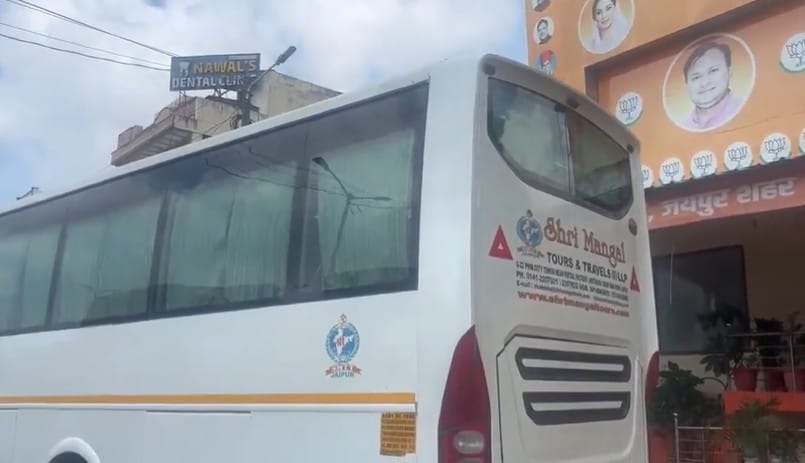
On the eve of the vote‑counting for the Jaipur Municipal Corporation elections, the Bharatiya Janata Party (BJP) initiated a systematic "barring" operation, transporting its council‑candidate aspirants by bus to keep them together until 22 September. The move, announced by party officials in Jaipur, seeks to ensure that candidates remain coordinated and insulated from external influences as the final tally approaches.
This logistical manoeuvre is rooted in a broader historical context where municipal elections in Rajasthan have often been fiercely contested, with party cohesion playing a decisive role. In previous cycles, the BJP has employed various strategies to maintain internal discipline, ranging from joint rallies to synchronized campaign messaging. The current approach reflects an evolution toward more controlled, intra‑party coordination, especially as council seats in Jaipur carry significant weight for urban governance.
The practical execution involved dispatching multiple buses from designated party hubs across the city, each carrying a group of candidates and their immediate campaign teams. While exact figures have not been disclosed, the operation required careful scheduling, fuel allocation, and driver coordination, underscoring a substantial logistical commitment. Party cadres reported that the buses were equipped with communication devices to facilitate real‑time updates on counting procedures and any emergent directives.
Party insiders have indicated that the convoy aims to minimise the risk of candidates being approached by rival factions or media during the sensitive counting period. Local political analysts observed that such a protective bubble can help the BJP present a united front, especially if the results are contested. Citizens in the vicinity expressed mixed reactions; some praised the orderly movement, while others questioned the necessity of restricting candidates’ freedom of movement during a democratic process.
The ripple effect of this strategy is expected to be felt in the Kotputli‑Behror district, where several BJP aspirants have familial or political ties to the city of Jaipur. By keeping the Jaipur candidates together, the party hopes to project stability that could bolster its standing among voters in adjacent districts, where municipal outcomes often influence perceptions of state‑level governance. Local traders anticipate that a clear result may either reassure or unsettle market expectations, depending on the perceived direction of municipal policy.
Election officials from the State Election Commission have acknowledged the convoy but emphasized that all activities must comply with the Model Code of Conduct. The commission reiterated that candidates remain free to attend counting centres, provided they do not breach any legal provisions. Municipal authorities have also assured that transportation arrangements will not interfere with the orderly conduct of the counting process scheduled for the upcoming days.
Looking ahead, the BJP’s candidates are expected to reconvene after the counting concludes on 22 September, at which point the party will assess the outcome and chart its next steps in Jaipur’s urban administration. The public awaits the official results, while party workers anticipate that the unified approach will translate into a decisive performance at the municipal level, reinforcing the BJP’s broader strategic objectives in Rajasthan.