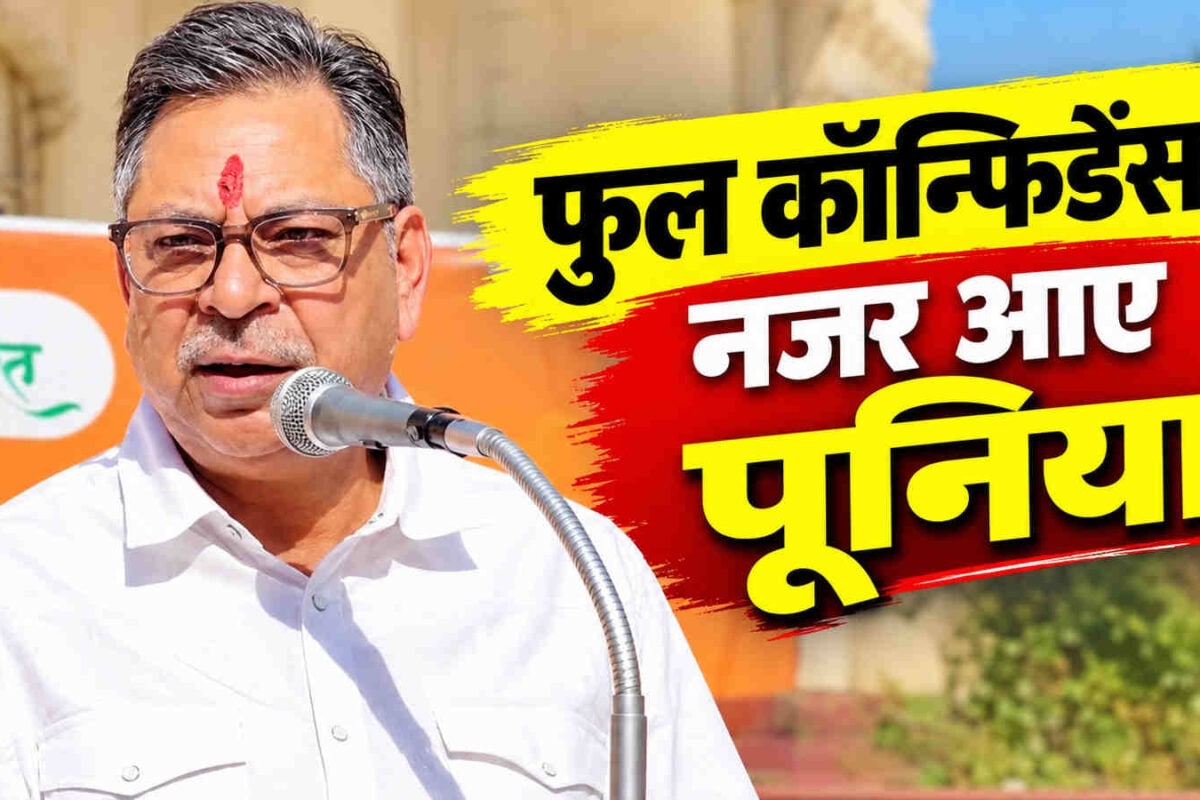
Bharatiya Janata Party National General Secretary and Rajya Sabha MP Satish Poonia arrived in Jhunjhunu for his maiden visit following his significant appointment as the party in-charge for Punjab. Exhibiting profound confidence regarding his new administrative responsibilities, Poonia addressed party workers and local media members, outlining his primary vision for strengthening the organization across the neighboring state. His strategic induction into the Punjab charge marks a critical phase for the party as it recalibrates its political footing in the region.
The political landscape in Punjab has historically remained a complex battleground characterized by intense regional dynamics, agricultural sensitivities, and shifting voter loyalties. Against this intricate socio-political backdrop, the Bharatiya Janata Party has been actively expanding its organizational footprint, aiming to emerge as a formidable standalone alternative. Satish Poonia, known for his organizational acumen and disciplined approach during his previous leadership stints in Rajasthan, has been entrusted with navigating these intricate political equations to fortify the party's cadre base.
Delving into the operational realities of the state organization, party strategists note that the focus heavily rests on grassroots mobilization, booth-level committee strengthening, and bridging communication gaps with diverse communities. While specific electoral statistics and numerical targets are continuously evaluated by the high command, the immediate logistical priority involves unifying local leadership units and addressing regional grievances effectively to build sustainable political momentum.
During his interaction in Jhunjhunu, Satish Poonia articulated his core philosophy regarding political responsibility, stating unequivocally that he would turn the party leadership's trust into absolute certainty. This direct quote highlights his commitment to result-oriented governance and organizational discipline. Local stakeholders, party cadres, and community observers have welcomed this assertive stance, viewing it as a clear signal of proactive leadership and rigorous oversight in the days ahead.
While national and regional political developments primarily center on Punjab, discussions during such high-profile visits inevitably resonate across neighboring districts, including Kotputli-Behror. Regional party workers and local traders closely monitor these leadership transitions, recognizing that political shifts in adjacent states often influence broader economic policies, interstate logistics, and socio-political discourse throughout northern India. The stability and strategic direction of political parties in neighboring regions directly impact cooperative federalism and local administrative priorities.
Administrative machinery and political observers alike maintain a watchful eye on how major political outfits structure their state-level interventions. As Satish Poonia assumes his comprehensive duties in Punjab, statutory oversight bodies and political analysts will evaluate the institutional adjustments made by the party. The implementation of structured outreach programs and systematic grievance redressal mechanisms remains paramount for ensuring long-term democratic engagement and institutional transparency.
Looking toward the future, the timeline for these political initiatives involves sustained organizational campaigns leading up to upcoming electoral cycles and legislative sessions. The public and party workers expect a methodical rollout of public outreach initiatives, policy dialogues, and leadership training camps. Ultimately, the success of these endeavors will depend on translating high-level strategic confidence into tangible electoral outcomes and robust community representation across the region.