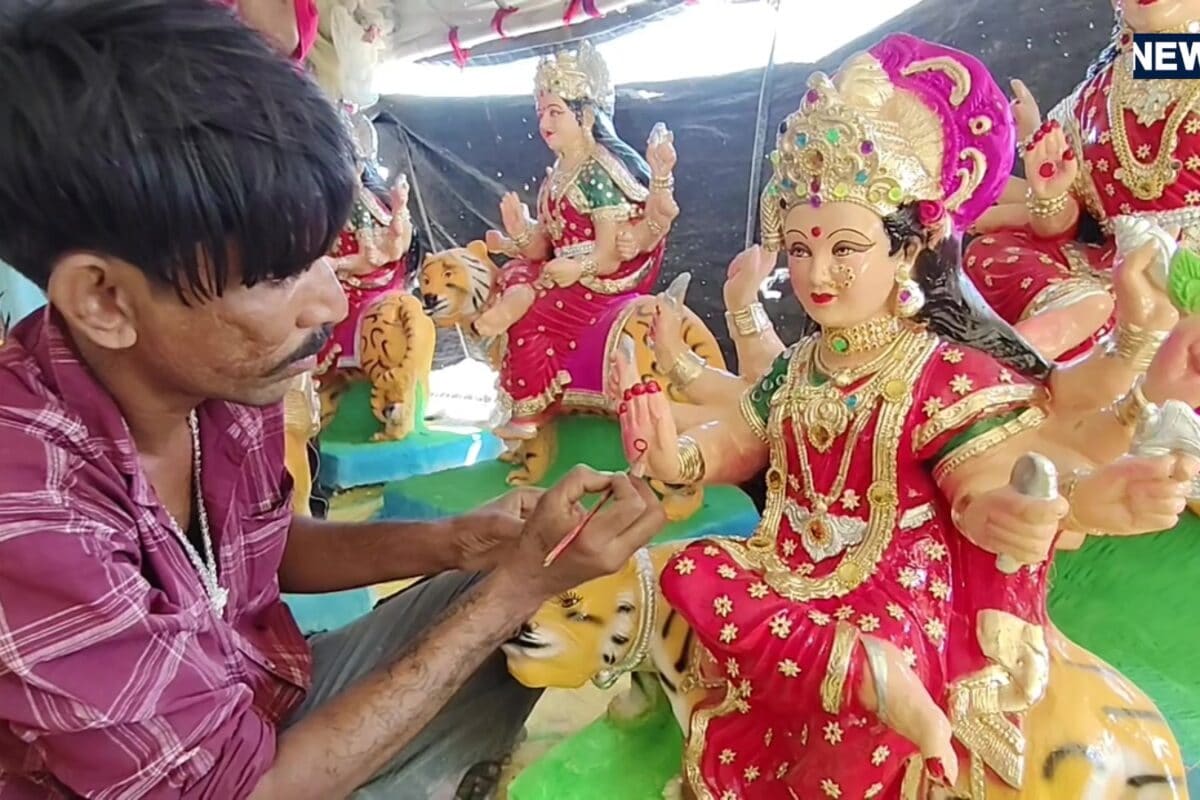
Preparations for the auspicious festival of Navratri 2026 have intensified significantly across Bikaner, marking a period of intense artistic activity and religious fervour. Along the bustling stretches of Pugal Road, traditional craftsmen who have travelled all the way from Balotara are deeply immersed in shaping raw soil into divine forms. This seasonal migration and establishment of temporary workshops highlight a deep-rooted cultural tradition that sustains artisan families year after year through dedicated craftsmanship.
The craft of idol making practiced by these families represents generations of inherited skills, patience, and devotion. Originating from Balotara, artists like Narayan carry forward an ancestral lineage of sculpting deities that demand precise anatomical proportions and expressive facial features. Working tirelessly under makeshift sheds alongside the dusty roads, these skilled hands transform ordinary clay and straw into magnificent representations of divine power and maternal grace.
At the active crafting sites along Pugal Road, the operational scale involves creating an array of deities scaling from two to six feet in height. The pricing of these meticulously sculpted idols ranges between three thousand and eight thousand rupees, reflecting the immense labour, time, and artistic precision invested in each piece. The financial stakes for these visiting families depend entirely on the successful completion and sale of these sacred structures during the compressed festive window.
Discussing the ground realities of their craft, lead artisan Narayan notes that traditional motifs continue to dominate public preference. Among the diverse variations crafted in the workshops, idols depicting Goddess Durga seated triumphantly on her celestial lion command the highest demand among devotees and pandal organizers. This specific iconographic representation requires superior structural framework and artistic detailing to ensure stability and aesthetic appeal.
Beyond the immediate micro-economy of Bikaner, the presence of these artisans stimulates regional trade networks by supplying foundational ritual elements essential for community celebrations. Local organizers, spiritual committees, and households rely heavily on these skilled sculptors for timely deliveries. The influx of seasonal artisans from Balotara fosters cultural exchange and commercial vitality within the urban outskirts during the preparatory phase of Navratri 2026.
While the artisans operate largely through traditional familial arrangements, local municipal and administrative bodies maintain oversight regarding public space utilization along major transit corridors like Pugal Road. Ensuring smooth pedestrian movement alongside these bustling roadside workshops remains a priority for civic management. Authorities coordinate with temporary settlers to maintain hygiene, waste management, and traffic discipline as festive crowds gather to place advance orders.
Looking ahead, the final weeks leading directly up to the commencement of Navratri 2026 will witness the peak delivery phase, where completed idols are safely transported to neighborhood pandals and residential altars. Artisans like Narayan remain focused on finishing the intricate painting and ornamentation stages. With steady demand and favorable market conditions, the community of sculptors anticipates a successful season that rewards their relentless manual labour.