
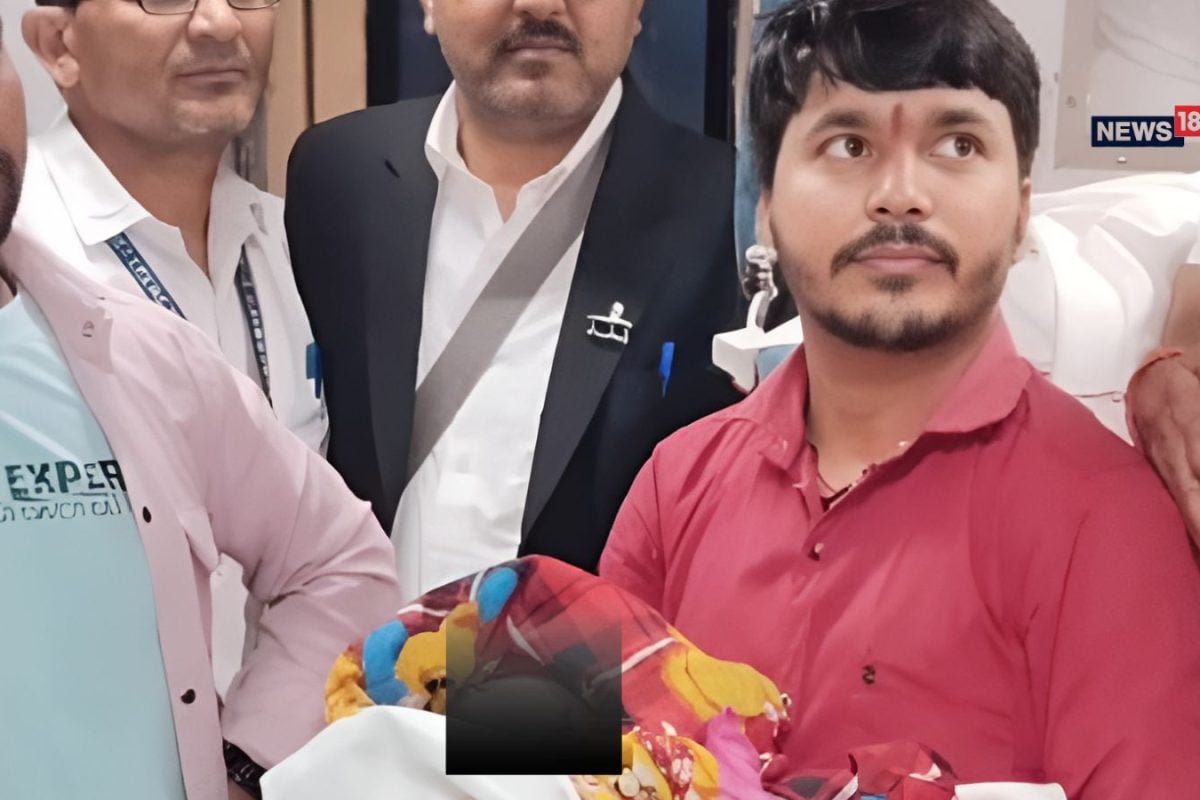
In a dramatic yet successful emergency medical intervention on Friday, a 28-year-old female passenger gave birth to a healthy infant aboard the moving Golden Temple Mail train within the jurisdiction of the Kota division of West Central Railway. The train, which was operating on its scheduled journey from Surat to Mathura, transformed into a temporary maternity ward as travelling ticket examiners and railway personnel orchestrated an emergency response in the middle of the route between Nagda and Shamgarh.
The incident highlights the unpredictable nature of long-distance train journeys across the Indian railway network, where millions of passengers traverse vast geographical expanses every single day. Long-haul trains such as the Golden Temple Mail serve as vital lifelines connecting western and northern India, making passenger safety, onboard medical preparedness, and seamless inter-station communication a paramount responsibility for the railway administration.
As the labour pains intensified unexpectedly for the 28-year-old passenger, Nisha Devi, the gravity of the situation became immediately apparent to the onboard railway staff. Without losing precious time, TTE K.K. Meena and Balram Meena took proactive control of the crisis, displaying exemplary duty of care by coordinating emergency medical support while the train continued moving towards its upcoming scheduled stops.
The successful onboard delivery between Nagda and Shamgarh required exceptional coordination between the travelling ticket examiners, train drivers, and the upcoming station control rooms. Railway personnel ensured that all available resources within the immediate vicinity of the coach were utilized to assist the mother during the critical moments of childbirth, demonstrating the dedication of frontline railway employees.
The regional impact of this heartwarming event resonated strongly across the transportation networks and local communities connected to the Kota division and neighboring regions. Incidents of medical emergencies on trains often test the infrastructural preparedness of transit hubs, bringing attention to the crucial role played by divisional railway medical facilities in safeguarding passenger welfare during transit.
Upon reaching the major railway stations of Kota and Gangapur City, specialized teams of railway doctors and medical personnel were already stationed on the platform to board the train. These medical professionals provided immediate and comprehensive primary medical treatment to both the new mother, Nisha Devi, and the newborn infant, stabilizing their vital signs before executing safe transfer protocols.
Following the administration of primary medical care at the platforms, both the mother and the newborn were swiftly transferred via an emergency ambulance service to a designated government hospital. According to the latest official health updates, both Nisha Devi and the newborn child are currently recovering under medical supervision and are reported to be in completely healthy and stable condition.
