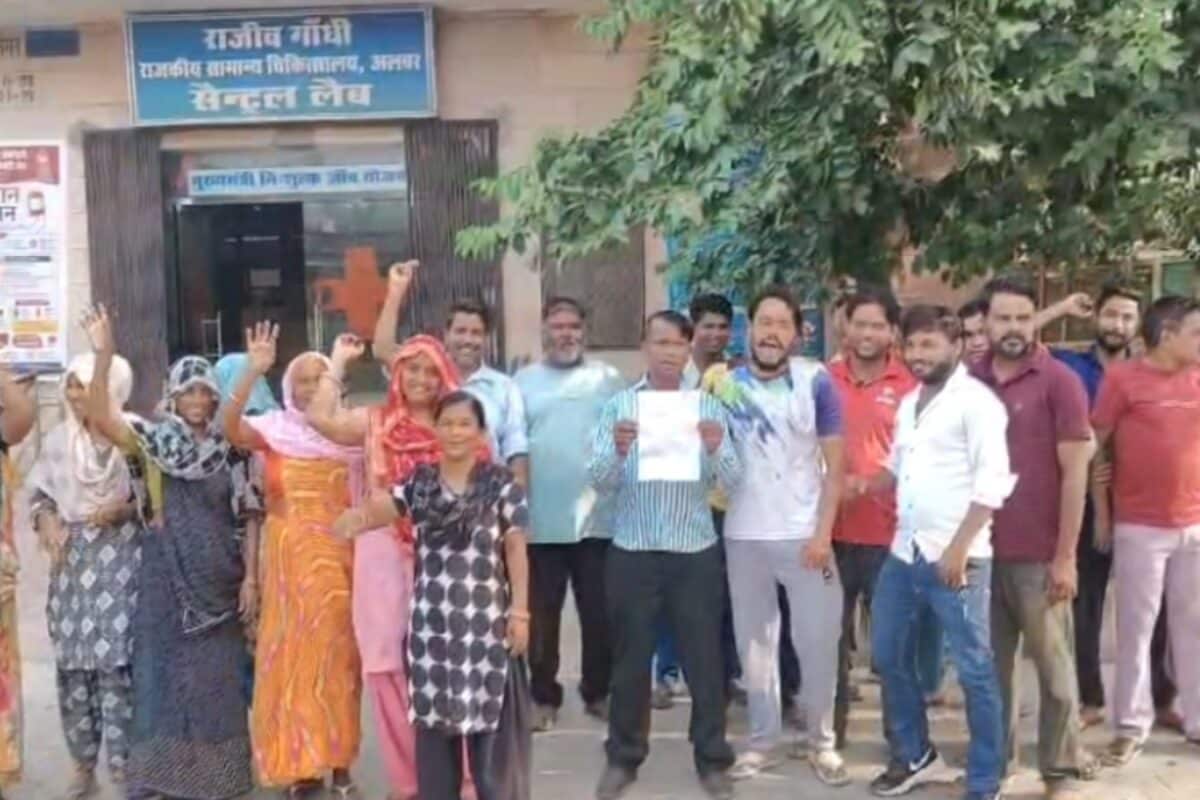
In a significant development concerning public health infrastructure in the Alwar region, sanitation workers across three major government hospitals have officially launched an indefinite strike. This drastic industrial action was triggered by persistent, chronic delays in the disbursement of their monthly remuneration, plunging the low-income workforce into severe economic uncertainty. As the primary custodians of hospital hygiene walk off their duties, the immediate operational fallout has begun to afflict critical patient-care areas, raising pressing administrative concerns regarding sanitation management.
The root cause of this ongoing standoff lies in the systemic administrative apathy regarding timely salary payments to contractual and regular support staff who form the backbone of hospital operations. For months, these frontline sanitation personnel have endured irregular pay cycles, stretching their meager household budgets to a breaking point. Operating within high-risk medical environments, these workers perform essential cleaning and bio-waste management tasks, yet their financial compensation remains consistently delayed, forcing them to adopt extreme measures to seek accountability from the hospital administration.
A closer examination of the financial stakes involved highlights the precarious vulnerability of these workers, who earn a meager salary of barely 6 to 7 thousand rupees per month. In an era of escalating living costs, this severely limited financial remuneration is delayed indefinitely, robbing workers of their basic dignity and ability to sustain their families. Despite bearing the physical burdens of maintaining rigorous hospital hygiene standards, the stark disparity between their grueling daily labor and their delayed, minimal compensation has created immense psychological and financial distress among the workforce.
As the strike enters consecutive days without an immediate resolution, the direct humanitarian toll is increasingly visible across the affected medical wards. Patients and their families, already grappling with critical illnesses and medical anxieties, are now forced to navigate accumulating filth, unemptied waste bins, and unhygienic corridor conditions. Local community members and visiting citizens have voiced grave concerns over the deteriorating sanitary environment, pointing out that public healthcare institutions must not be allowed to become breeding grounds for secondary infections due to unresolved administrative negligence.
The administrative ramifications of this sanitation strike extend beyond the immediate municipal boundaries of Alwar, resonating deeply within neighboring administrative jurisdictions, including the developing Kotputli-Behror district. Given the interconnected regional healthcare referral patterns, many patients from surrounding towns and rural hinterlands travel to Alwar for specialized medical intervention. Any disruption in hospital functionality and hygiene standards directly threatens public health safety nets across the entire regional economy, increasing the burden on local community clinics and emergency response networks.
In response to the mounting crisis, hospital administrators and relevant district authorities face intense public scrutiny to urgently intervene and resolve the wage dispute. Statutory oversight demands that the contracting agencies and hospital management immediately clear pending dues and establish a transparent, permanent mechanism for timely monthly disbursements. Failure to address the legitimate grievances of the sanitation staff risks prolonged industrial unrest, prompting calls for stricter regulatory compliance and accountability in outsourcing public health support services.
Looking ahead, the resolution of this strike hinges on urgent negotiations between worker representatives and hospital authorities regarding wage security and administrative reforms. Public health advocates and community stakeholders emphasize the necessity of restructuring out-sourced labor contracts to guarantee statutory minimum wages and timely payments without bureaucratic hurdles. Until a formal, binding agreement is reached, the primary focus remains on restoring basic sanitation services to safeguard vulnerable patients from further health hazards in Alwar's public medical facilities.